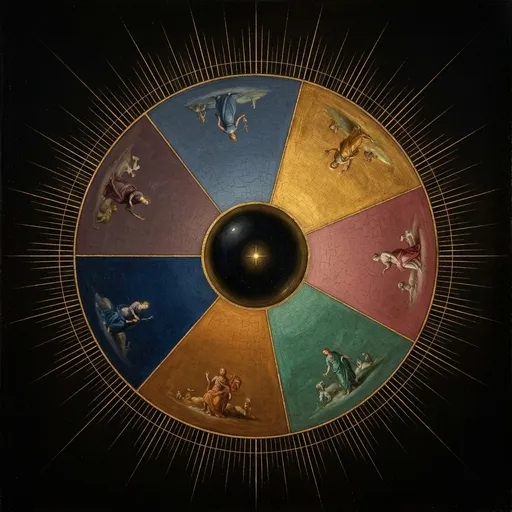

Patience
Patientia
Virtue VI of VII · Stillness inside the storm
Patience Patientia, and what it looks like today
When the room heats up, your voice gets quieter—and everyone listens.
Patience is not passive waiting or letting people walk over you. Aquinas called it the courage that endures friction without losing sight of what matters—holding space between trigger and response when everyone else is firing off heated texts.
- Counters
- Wrath
- Patron
- Uriel
- Avg score
- 60%
I · The psychology
How Patience works under pressure
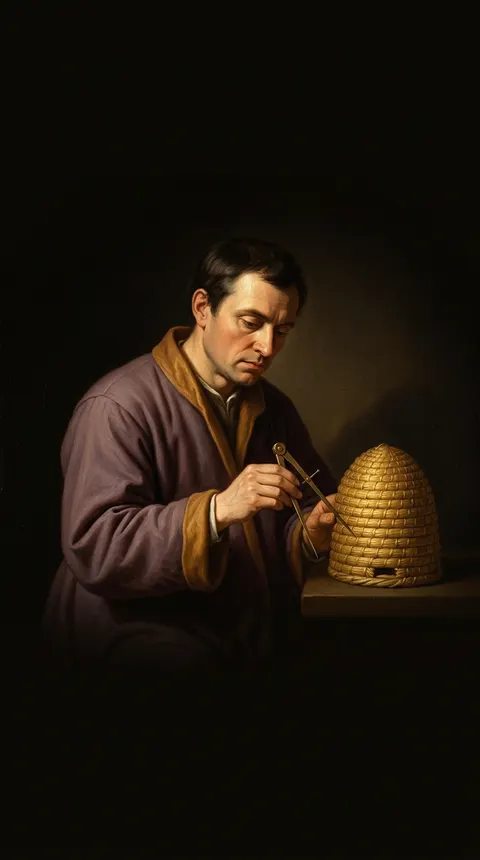
Anger gives a fast, cheap illusion of control. High-Patience people tolerate ambiguity and delay without catastrophizing: you understand that worthwhile crafts, difficult conversations, and healing people rarely move on a microwave timer.
What people rely on
De-escalation in tense moments, fair hearing during conflict, and stability when plans fall apart.
The quiet cost at 2 a.m.
Because you almost never blow up, people assume things did not hurt you—until you quietly step away for good.
II · The gift and the trap
The rare gift
Crisis poise, deep listening, and zero regret over words spoken in a five-minute rage.
When carried too far
Enduring broken situations for months longer than healthy because you CAN tolerate them.
III · Everyday signs
Four signs Patience comes naturally to you
- I.
Leaving an angry draft unsent for an hour and rewriting half of it once your pulse drops.
- II.
Explaining something a second time without lacing your voice with sarcasm.
- III.
Staying practical when flights delay, tech breaks, or traffic locks up.
- IV.
Listening all the way to the end of someone’s argument before forming your reply.
IV · What it guards against
Wrath Ira
Turning frustration, delay, and bruised pride into instant scorched earth.
Compare your Patience against WrathThree habits that protect your Patience from burnout
- 01
Say "That actually bothered me" at 20% irritation instead of waiting until 95%.
- 02
Ask yourself whether patience in a situation is growing something—or just delaying a hard exit.
- 03
Give yourself permission to leave rooms where disrespect has become a pattern.
V · Archetypes
Six archetypes led by Patience
The test pairs your highest virtue with your runner-up. If Patience finishes #1, your second-highest virtue determines which of these six portraits you unlock.
The Unhurried Sage
You never need the last word in an argument—time usually proves your point by Thursday anyway.
The Forgiving Oak
You hold space for people while they figure themselves out, without tapping your watch.
The Watchtower
You read rooms slowly, speak carefully, and mean every word for years.
The Peaceweaver
You translate between angry people who stopped actually listening to each other twenty minutes ago.
The Stone Garden
Very little in modern life feels like an actual emergency to you—and nine times out of ten, you are right.
The Cathedral Builder
You can work on something hard for two years without needing daily applause to stay locked in.
VI · Classical & scientific lineage
From Prudentius to VIA psychology
In character-strength research
Mapped to VIA Forgiveness, Prudence, and Emotion Regulation (Schnitker, 2012), interpersonal and life-hardship patience predict lower cardiovascular stress and stronger conflict resolution.
In classical allegory
In Prudentius’s poem, Patientia stands utterly still in forged mail while Ira hurls spear after spear until Wrath exhausts its own fury.
Archangel correspondence
Classical emblem traditions link Patience with Uriel, “Guardian of the Golden Hourglass”—a symbolic portrait of how this habit holds the line under pressure.
How Patience pairs with others
Test any duo pairing on the compatibility page
Nobody runs on one virtue alone.
The 7 Heavenly Virtues Test scores Patience alongside the other six in two minutes, maps your unguarded door, and compares your wheel against your country.